
The Best Fluffy Pancakes recipe you will fall in love with. Full of tips and tricks to help you make the best pancakes.
Best Roblox Horror Games to Play with Friends: 15 Terrifying Experiences for 2026
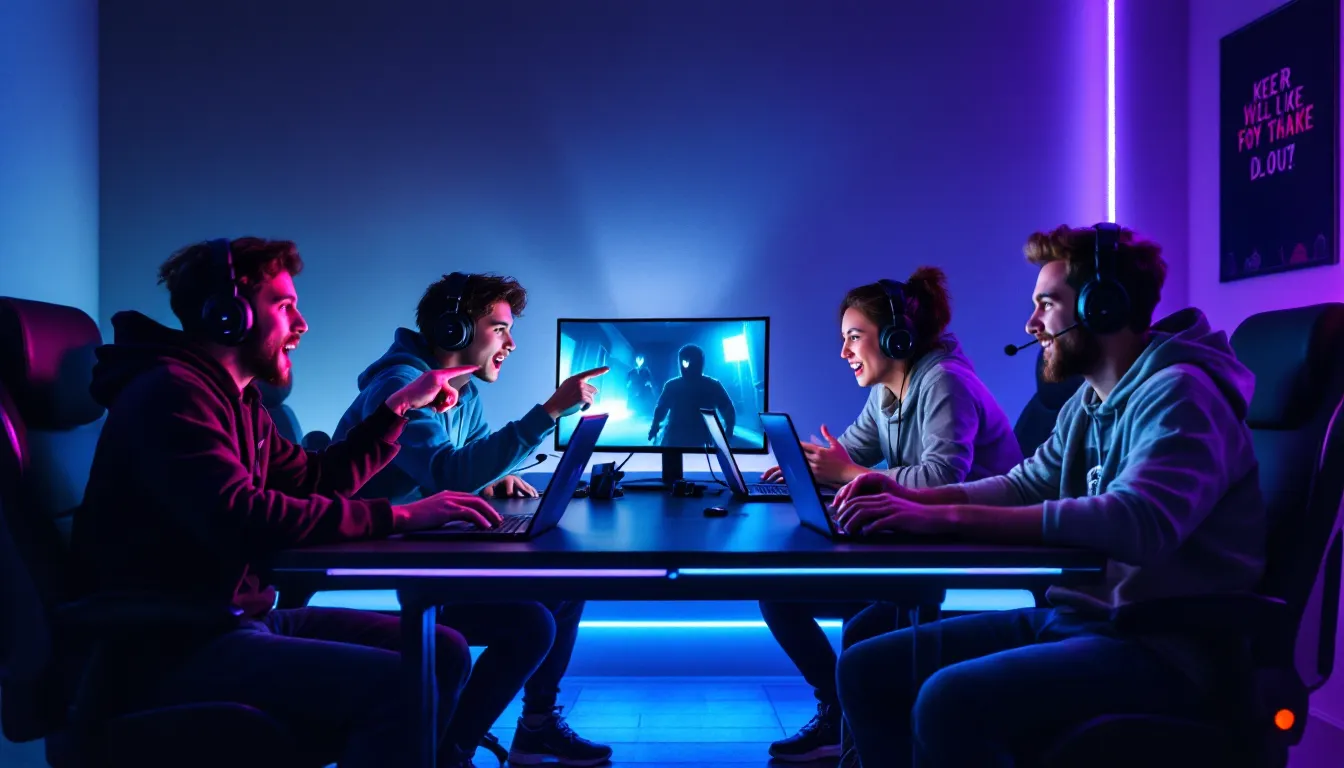
Roblox horror isn’t just about cheap jump scares anymore. Over the past few years, the platform has become home to some genuinely terrifying experiences that rival standalone indie horror titles, and they’re at their best when you’re screaming into Discord with friends at 2 AM. Whether you’re coordinating escape routes while a supernatural entity hunts your squad, solving cryptic puzzles in abandoned buildings, or just trying not to laugh when your friend gets grabbed first, Roblox horror games deliver a unique blend of tension and chaos that’s hard to replicate elsewhere.
The beauty of these games lies in their accessibility and variety. Most are free, support cross-platform play, and range from pulse-pounding chase sequences to slow-burn psychological dread. This list covers 15 of the best Roblox horror games that shine brightest in multiplayer, updated for 2026 with titles that have proven staying power and active communities. Grab your crew, turn off the lights, and prepare for some sleepless nights.
Key Takeaways
- Roblox horror games deliver multiplayer scares that transform solo terror into shared experiences, with free access, cross-platform play, and built-in social features perfect for coordinating strategies with friends over Discord.
- Top titles like The Mimic, Doors, and Apeirophobia offer distinct gameplay styles—from narrative-driven Japanese folklore to fast-paced entity evasion—ensuring variety for groups with different horror preferences and time commitments.
- Asymmetric multiplayer mechanics in games like Piggy and Flee the Facility create high-stakes cooperation where individual mistakes directly impact team survival, amplifying both tension and emotional investment.
- Effective communication, audio setup, and environmental optimization (dark rooms, headphones, quality graphics) significantly enhance horror immersion and allow groups to catch critical sound cues that determine success or failure.
- Most Roblox horror games support 2-6 players with regular content updates, fresh mechanics, and seasonal events, keeping experiences engaging long after initial playthroughs while maintaining active communities for strategy sharing.
Why Roblox Horror Games Are Perfect for Group Play
Roblox horror games thrive on multiplayer dynamics in ways that traditional horror titles often can’t. The platform’s social infrastructure, voice chat, friend lobbies, in-game emotes, turns solitary terror into shared hysteria. When everyone’s freaking out simultaneously, the fear becomes contagious but also strangely manageable. You’re not alone in the dark: you’ve got three other people equally convinced they heard footsteps behind them.
The random element of human behavior adds unpredictability that scripted AI enemies can’t match. Someone always wanders off even though warnings. Someone else inevitably gets stuck in a doorway during a chase. These organic moments of comedy and catastrophe create stories your group will retell for months. The barrier to entry is low, no purchase required, runs on most hardware, so convincing friends to join is easier than coordinating a $60 game purchase.
Many Roblox horror games also feature asymmetric or cooperative mechanics designed specifically for teams. Roles might require specific players to hold items, distract enemies, or solve puzzles simultaneously. This forced coordination raises the stakes: one person’s mistake can doom the entire squad, which amps up both tension and investment. The platform’s rapid development cycle means fresh content drops regularly, keeping experiences from going stale between sessions.
Top Roblox Horror Games for Cooperative Thrills
The Mimic: Survive Japanese Horror Folklore
The Mimic remains the gold standard for narrative-driven Roblox horror. Across its four books (with Book III chapters receiving major updates in late 2025), players navigate Japanese folklore-inspired environments while evading yokai and solving environmental puzzles. Each chapter introduces new monsters with distinct mechanics, Enzukai’s light-sensitivity, Netamo’s sound-based hunting, that force teams to adapt strategies constantly.
The atmosphere is oppressive. Dimly lit corridors, ambient audio that makes you second-guess every sound, and genuine lore that rewards attention to detail. Communication is critical: someone needs to track monster positions while others handle puzzle elements. Deaths reset progress to checkpoints, so careless rushes get punished. The game supports 1-4 players, but three is the sweet spot for balancing difficulty and coordination.
Recent patches in early 2026 refined hitbox detection and added accessibility options for photosensitivity, addressing community complaints. The developer’s commitment to story depth sets it apart, this isn’t mindless running. Expect 45-90 minute sessions per chapter depending on your team’s puzzle-solving speed.
Doors: Fast-Paced Entity Evasion
Doors took the platform by storm in 2022 and hasn’t slowed down. The premise is deceptively simple: progress through 100 doors while avoiding entities that punish specific behaviors. Rush attacks if you don’t hide when lights flicker. Eyes damages anyone who looks at it. Screech requires quick reactions to avoid damage. The genius lies in layering these threats, rarely do you face just one problem at a time.
The pacing is relentless. Unlike slower horror games, Doors keeps momentum high with quick deaths and instant respawns (for the team to continue). This makes it perfect for groups with shorter attention spans or those who prefer action over slow-burn dread. The Hotel+ update in mid-2025 expanded the entity roster and added modifiers that remix runs, giving veterans new challenges.
Optimal team size is 2-4 players. Solo is viable but misses the comedic timing of watching friends panic-sprint into the wrong closet. The game rewards game sense, learning entity tells, memorizing safe rooms, optimizing lockpick usage. Expect 30-50 minute full runs, though early deaths are common while learning mechanics. According to coverage from gaming communities, players often compare strategies across runs to refine their approach.
Apeirophobia: Navigate Endless Liminal Spaces
Apeirophobia taps into the unsettling aesthetic of liminal spaces, those eerily empty transitional areas like office hallways and parking garages. Each level represents a different “backrooms” environment, from fluorescent-buzzing offices to claustrophobic vents. The threat model varies by level: some feature hostile entities, others rely purely on atmosphere and navigation puzzles.
What makes this compelling for groups is the shared disorientation. Liminal spaces are inherently confusing, so having multiple perspectives helps triangulate exit routes. The game deliberately messes with spatial logic, corridors loop unexpectedly, rooms don’t connect how they should. Voice chat becomes essential for coordinating search patterns and avoiding getting separated.
The developer has consistently added new levels throughout 2025, with Level 12 dropping in January 2026. Each addition brings fresh mechanics and entity behaviors. The game’s difficulty spikes hard around Level 6, where patience and methodical exploration beat reckless rushing. Sessions typically run 60-90 minutes for a full playthrough, assuming your team doesn’t get lost in the Poolrooms for twenty minutes.
Dead Silence: Escape the Vengeful Doll
Based loosely on the 2007 horror film, Dead Silence is a short but intense experience where teams investigate a haunted theater while evading Mary Shaw, a murderous ventriloquist’s doll. The core mechanic is brilliant in its simplicity: make noise and she finds you. Running, dropping items, even opening doors carelessly generates sound that attracts her attention.
This forced stealth creates natural tension in groups. Someone always forgets and sprints at the worst moment. The blame game afterward is half the fun. The theater environment is tightly designed with multiple floors, hidden rooms, and collectibles that fill in backstory. Teams need to coordinate movement patterns, scout ahead quietly, and time distractions when necessary.
The game received a visual overhaul in late 2024 that significantly improved lighting and model quality. Runs take 20-40 minutes depending on how cautiously you play. It’s perfect for groups wanting a complete horror experience in a single session without long-term commitment. The jump scares are earned rather than cheap, and the ending sequence delivers satisfying payoff.
Geisha: Psychological Horror in Abandoned Settings
Geisha leans into psychological horror and Japanese urban legends. Set across multiple chapters in abandoned locations, schools, apartments, forests, players uncover the tragic story of a vengeful spirit while solving puzzles and avoiding instant-death encounters. The game emphasizes atmosphere over action, with long stretches of exploration punctuated by sudden terror.
The spirit’s behavior is semi-random, which prevents scripted strategies. She can appear in different locations depending on player proximity and progression triggers. This unpredictability keeps even veteran players on edge. The game’s sound design deserves special mention, subtle audio cues telegraph danger, but only if you’re paying attention over your friends’ panicked chatter.
Chapter updates through 2025 expanded the narrative and introduced new mechanics like sanity systems and item management. The game works best with 2-3 players: more than that and the difficulty balance breaks. Expect 40-60 minutes per chapter. Fair warning: the story gets genuinely dark, dealing with themes of tragedy and revenge that might hit harder than typical Roblox fare.
Best Investigation and Mystery Horror Games
The Maze: Classic Horror with Strategic Teamwork
The Maze is Roblox horror distilled to its purest form. Teams spawn in a massive, procedurally-generated maze with one objective: find the exit before the monster finds you. The creature hunts actively, using line-of-sight detection and sound tracking. No puzzles, no story, just primal chase mechanics that get your heart racing.
What elevates this beyond simple tag is the strategic layer. The maze’s layout changes each run, so memorization doesn’t help. Teams can split up to cover more ground but risk isolated deaths. Flashlights reveal more but make you visible. The monster’s speed increases over time, turning methodical exploration into desperate sprinting. Many players reference detailed maze navigation strategies when planning their approach to complex layouts.
Recent 2026 updates added difficulty modifiers and cosmetic progression, giving veterans reason to return. The game shines with 3-5 players, enough for tactical splitting but not so many that the maze feels crowded. Runs vary wildly from five-minute speedruns to thirty-minute marathons depending on maze RNG and monster aggression.
Identity Fraud: Unravel the Mystery Together
Identity Fraud introduces a clever twist: not everyone you encounter is friendly. Set in a dark, labyrinthine underground facility, players search for exits while avoiding monsters, some of which disguise themselves as other players. The paranoia this creates in voice chat is delicious. Is that really your friend calling for help, or is it the shapeshifter luring you into a trap?
The maze contains multiple “frauds” (monsters), each with unique behaviors and tells. Learning to identify them is half the challenge. The other half is navigation through sprawling, dimly-lit corridors filled with dead ends and loop-arounds. Teams need to establish verification systems, code words, position callouts, to confirm identities without getting caught.
The game received graphical improvements in 2024 that enhanced visibility without killing the oppressive darkness. There are three mazes of increasing difficulty, with the third requiring serious coordination and game knowledge. Sessions run 30-60 minutes depending on which maze you attempt. It’s best experienced with a consistent group that can develop shared strategies and inside jokes about who falls for impersonations.
Murder Mystery 2: Social Deduction with Horror Elements
Murder Mystery 2 isn’t pure horror, but its atmosphere and tension earn it a spot on this list. Each round assigns roles: one Murderer, one Sheriff, and Innocents. The Murderer must eliminate everyone while remaining undetected. The Sheriff has a gun but doesn’t know who to trust. Innocents must survive, gather clues, and help the Sheriff identify the threat.
The horror comes from helplessness and paranoia. As an Innocent, you’re unarmed and vulnerable, never knowing if the person next to you is about to backstab you. The maps, mansions, abandoned facilities, dark warehouses, set a consistently creepy tone. The best moments happen when the Murderer is down to the last few targets and everyone’s nerves are shot.
The game’s massive popularity means instant matchmaking and a healthy trading economy around cosmetic knives and effects. It’s more casual than other entries on this list, with quick 5-10 minute rounds perfect for warming up before heavier horror sessions. The social deduction aspect rewards communication and observation, making it great for friend groups who enjoy lying to each other.
Survival Horror Games That Test Your Team
Piggy: Escape the Infected Together
Piggy blends Granny-style escape mechanics with lore-heavy storytelling across multiple seasons. One player becomes Piggy (or another infected character), hunting the rest of the team as they solve puzzles and unlock escape routes. Each map contains keys, tools, and interactive elements that must be combined correctly to open the exit.
The game’s narrative ambition sets it apart. Through twelve chapters and multiple spin-off modes, players uncover a surprisingly deep story about infection, survival, and moral choices. The bot mode lets teams practice together against AI before facing player-controlled hunters, lowering the frustration curve. Various difficulty settings and game modes (including Plant vs. Piggy-style tower defense) provide variety.
Book 2 concluded in late 2024, with developer MiniToon releasing periodic special event chapters through 2025 and into 2026. The community remains active, and speedrun strategies are constantly evolving. Expect 10-20 minute rounds in standard mode. The game works with 2-6 players, though 4-5 is optimal for puzzle distribution. Communication about puzzle solutions and Piggy positions is mandatory for consistent escapes.
Flee the Facility: Hide, Seek, and Survive
Flee the Facility is asymmetric horror where one player is the Beast and up to three are Survivors. Survivors must hack computers scattered across the map to unlock the exit, a process that takes time and makes noise. The Beast has speed, detection abilities, and can freeze captured Survivors in place, unless teammates rescue them.
The genius is in the risk-reward tension. Do you go for the risky computer in the open or the safer one that’s farther from the exit? Do you rescue your frozen teammate immediately or finish hacking first? The Beast’s abilities, tracking survivor positions, temporary speed boosts, create dynamic cat-and-mouse gameplay that never feels stale.
Maps range from tight indoor facilities to sprawling outdoor compounds, each demanding different strategies. The game received significant balance updates in 2025 addressing survivor speed and Beast detection ranges. Rounds last 10-15 minutes and the role rotation ensures everyone experiences both sides. It’s perfect for competitive friend groups who enjoy the thrill of outplaying each other. Extensive player discussions around effective evasion techniques have shaped the current meta.
Roses: Manage Resources While Fighting Evil
Inspired by Plants vs. Zombies, Roses is a wave-based survival horror game where teams defend against increasingly difficult monster hordes. Players plant defensive roses that attack automatically, build barriers, and manage a shared economy to purchase upgrades. The horror comes from the overwhelm, later waves throw so many threats that coordination breaks down into beautiful chaos.
Each rose type serves specific roles: damage dealers, crowd control, economy boosters. Teams must balance immediate defense with long-term investment, deciding collectively how to allocate limited resources. Poor planning means getting overrun by wave five. Smart synergies between rose types and player positioning can carry you deep into double-digit waves.
The game added a prestige system in late 2025 that rewards repeated playthroughs with permanent upgrades, giving hardcore players progression to chase. There are multiple maps with different layouts that favor different strategies. Sessions run 30-60 minutes depending on how far you survive. It’s less traditionally scary than other entries but delivers genuine tension when the last barrier falls and you’re frantically planting emergency defenses.
Atmospheric Horror Experiences for Immersive Groups
3008: Infinite IKEA Nightmare
Based on the SCP Foundation tale, 3008 traps players in an endless IKEA store where day-night cycles determine safety. During the day, players scavenge for food, materials, and furniture to build bases. When night falls, hostile staff members emerge, forcing everyone to hide or defend their fortifications. It’s part survival game, part horror experience, and entirely unsettling.
The infinite procedural generation creates a unique sense of wrong-ness. The store goes on forever in every direction, identical yet subtly different. Getting lost is easy. Finding your friends after respawning is a genuine challenge. The community aspect shines here, servers persist across sessions, so you’ll encounter other players’ bases, form alliances, and share resources.
The staff AI received improvements in 2025 that made them more aggressive and better at pathfinding, raising the difficulty considerably. Base building allows for creativity, defensive choke points, trap mazes, vertical structures. The game works solo but truly shines with 3-6 friends collaborating on a mega-base. Sessions can last hours if you’re invested in building and surviving multiple nights. The atmosphere, fluorescent lighting, ambient store music, sudden darkness, is perfectly executed.
Alone in a Dark House: Cinematic Fear
Alone in a Dark House delivers a short, polished horror experience focused on atmosphere and story. Players explore a multi-story house with a dark history, uncovering notes and environmental storytelling while a supernatural presence stalks them. The game emphasizes quality over length, with carefully crafted scares and impressive lighting work that rivals commercial indie titles.
While technically playable solo (hence the title), it’s far better with friends for moral support and shared reactions. The entity’s behavior adapts to player actions, spending too long in one area or making excessive noise increases danger. The puzzle elements are light, focusing more on exploration and survival. Multiple endings based on player choices add replayability.
The developer has updated the game periodically with bug fixes and graphical enhancements, most recently in Q4 2025. A full playthrough takes 30-45 minutes. It’s perfect for groups wanting a tightly-paced, story-focused horror experience without grinding or repetition. The production values, voice acting, environmental detail, sound design, set a high bar that many Roblox horror games aspire to but few reach.
Night of the Werewolf: Tense Role-Playing Horror
Night of the Werewolf is social deduction meets survival horror. Set in a small village, players are randomly assigned roles: Villagers must identify and eliminate the Werewolf, while the Werewolf must kill Villagers without being caught. Each night phase, the Werewolf chooses a victim. Each day phase, players discuss and vote on who to execute.
The horror comes from uncertainty and accusation. Voice chat amplifies the tension as players make cases, form alliances, and lie convincingly. The Werewolf must blend in while subtly directing suspicion elsewhere. Villagers with special roles, the Seer who can check identities, the Hunter who can retaliate if killed, add strategic depth.
The game works best with 6-10 players, though versions exist for smaller groups. Rounds last 15-30 minutes depending on how quickly the Werewolf is identified or how effectively they thin the village. It’s less visually scary than other entries but psychologically intense. The best moments come from dramatic reveals and accusations among friends. Regular updates through 2025 added new roles and map variants, keeping the meta fresh for veterans who can typically refer to community role guides for advanced tactics.
Tips for Maximizing Your Roblox Horror Experience
Communication Strategies for Team Survival
Effective communication separates teams that thrive from teams that die in the first five minutes. Establish clear callouts for locations, agree on names for areas before you’re panicking. “I’m by the red door” means nothing when there are six red doors. Assign roles if the game allows: one person navigates, another watches for threats, someone else handles puzzles.
Don’t talk over each other during critical moments. Horror games rely on audio cues, footsteps, breathing, music changes, that get drowned out by constant chatter. Develop a “quiet signal” for when everyone needs to shut up and listen. Push-to-talk in Discord prevents accidental hot-mic moments that reveal positions or distract during key sequences.
Balancing comedy with focus is an art. Jokes relieve tension and make sessions memorable, but there’s a tipping point where nobody takes the game seriously and immersion dies. Read the room. If someone’s genuinely scared or frustrated, dial it back. If everyone’s just messing around and having fun, lean into the chaos. The best sessions find a rhythm between genuine scares and laugh-out-loud moments.
Technical Setup for the Best Scares
Audio is critical for horror game immersion. Use headphones, preferably with decent spatial audio, to catch directional sound cues that speakers miss. Many Roblox horror games use 3D positional audio for entity movements: not hearing them coming ruins the experience. Adjust your audio balance so game sound is clear but Discord doesn’t get drowned out.
Visual settings matter more than you’d think. Many players crank brightness to reduce scares, but this kills atmosphere. Keep brightness at default or slightly above. Turn off low-quality graphics if your system can handle it, texture details and lighting effects are crucial for horror ambiance. Disable Roblox’s automatic camera shake in settings if it causes motion sickness, but leave other effects enabled.
Play in the right environment. A dark room amplifies scares exponentially. Minimize distractions, close other tabs, silence phones, let household members know you’ll be screaming periodically. Schedule sessions when you can commit full attention for 1-2 hours without interruptions. The best horror experiences happen when everyone’s equally invested and immersed.
Consider recording sessions for later laughs. Watching your friend’s perspective of the moment they got grabbed, or hearing yourself confidently claim “there’s nothing behind that door” seconds before disaster, creates endless entertainment. Just make sure everyone’s comfortable being recorded first.
How to Choose the Right Horror Game for Your Group
Match the game to your group’s horror tolerance and play style. Some friends love intense jump-scare fests like Doors, while others prefer slow-burn atmospheric dread like Apeirophobia. If anyone has serious anxiety around horror, start with lighter entries like Murder Mystery 2 or Piggy’s bot mode before escalating to harder-core experiences.
Consider time commitment and session length. Games like The Mimic require 60+ minute sessions to complete chapters, which isn’t viable for casual weeknight gaming. Shorter experiences like Dead Silence or The Maze offer complete arcs in 20-40 minutes, perfect for testing waters or filling time. If your group meets irregularly, avoid games with persistent progression that loses momentum between sessions.
Skill level matters. Some games have brutal difficulty curves, Apeirophobia’s later levels or Doors’ Hotel+ modifiers punish mistakes harshly. If your crew is new to Roblox horror, start with more forgiving options like Flee the Facility or 3008 where failure doesn’t mean restarting completely. Veterans seeking challenge should gravitate toward The Mimic or Identity Fraud’s third maze.
Group size compatibility is crucial. Verify player counts before committing, nothing worse than having six people show up for a game capped at four. Some games scale difficulty with player count, while others break if you don’t have the optimal number. Read recent patch notes or community feedback to check if multiplayer balance is in a good state.
Platform compatibility and performance vary. Most Roblox games run on potato PCs, but graphically intensive titles like Alone in a Dark House might struggle on older systems. Mobile players should verify the game has touch controls and isn’t optimized exclusively for keyboard-mouse. Cross-platform play is standard, but performance gaps can frustrate when PC players are fleeing smoothly while mobile friends are stuck lagging.
Conclusion
Roblox horror in 2026 offers something for every type of scare-seeker and friend group. From the narrative depth of The Mimic to the pure chase adrenaline of The Maze, from the social deduction tension of Night of the Werewolf to the survival grind of 3008, these fifteen games represent the best the platform has to offer for multiplayer terror.
What makes these experiences special isn’t just the scares, it’s the shared memories they create. The time your friend confidently led everyone into a dead end. The clutch save when someone rescued the whole team from certain death. The inside jokes that form around repeated failures and unexpected victories. That’s what keeps players coming back long after they’ve memorized the jump scare timing.
The beauty of Roblox’s ecosystem is its constant evolution. Developers update these games regularly, adding chapters, tweaking balance, and responding to community feedback. By the time you’ve mastered one game’s mechanics, there’s fresh content or a new title emerging from the platform’s creative community. Grab your friends, pick a game from this list, and immerse, just maybe keep the lights on for the first run.