
The Best Fluffy Pancakes recipe you will fall in love with. Full of tips and tricks to help you make the best pancakes.
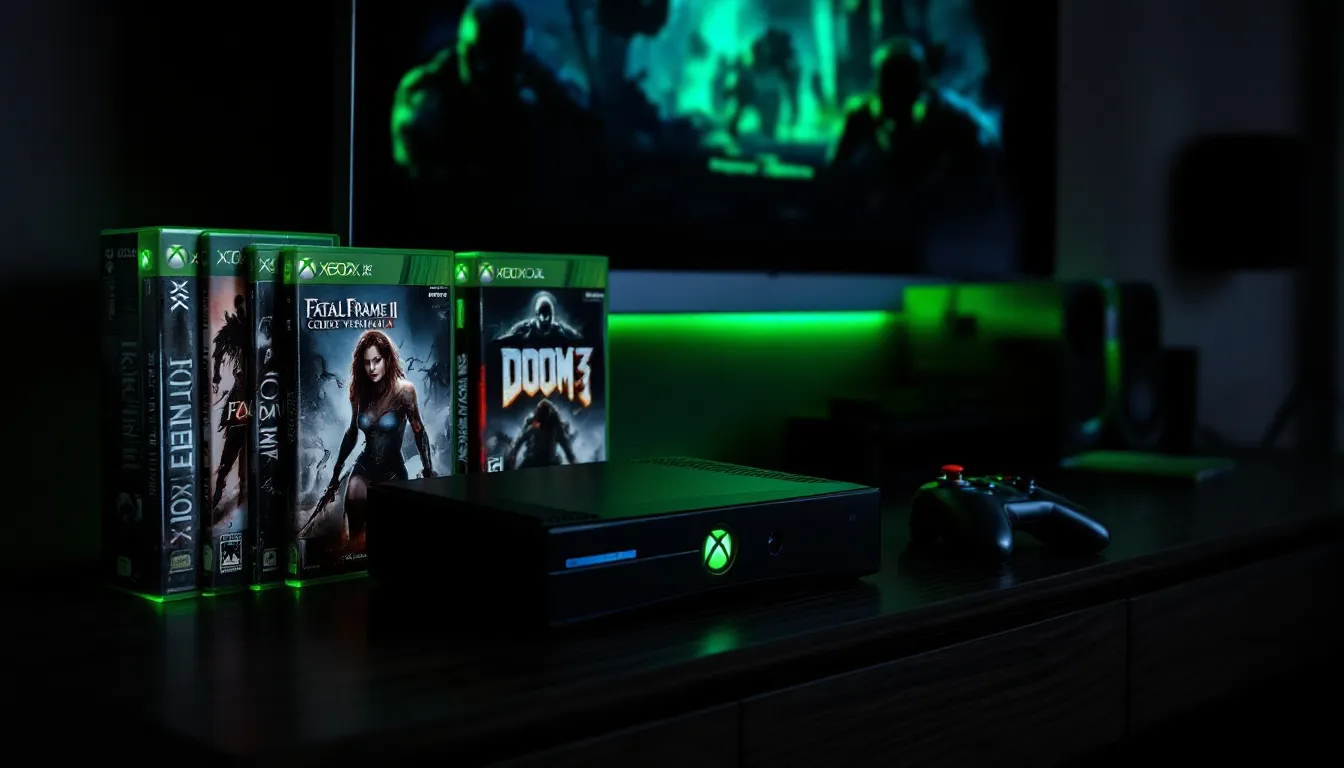
Original Xbox Horror Games: The Definitive Guide to the Console’s Scariest Titles
The original Xbox launched in November 2001, and while Microsoft’s first console is often remembered for Halo and Xbox Live, it quietly became one of the best platforms for horror gaming during the sixth generation. Between 2001 and 2006, the black box hosted some of the most technically impressive and genuinely terrifying games of the era, from atmospheric survival horror masterpieces to action-horror hybrids that pushed the console’s capabilities to their limits.
Unlike its competitors, the Xbox’s raw power allowed developers to craft darker, more detailed environments with lighting effects that were essential for horror. The built-in hard drive meant no memory card juggling, and Xbox Live opened doors for horror experiences that connected players in new ways. Whether you’re a retro collector hunting down rare physical copies or a modern gamer curious about what made the original Xbox special, this guide covers everything from the platform-defining survival horror classics to the hidden gems that deserve a second look in 2026.
Key Takeaways
- The original Xbox’s technical advantages in lighting, shadow rendering, and 5.1 surround audio made it an exceptional platform for horror games, delivering superior visuals and atmosphere compared to competing consoles during the 2001-2006 era.
- Original Xbox horror games like Silent Hill 2, Fatal Frame II, and Call of Cthulhu pioneered innovative features such as dynamic lighting, sanity management systems, and immersive audio design that influenced horror gaming for decades to come.
- Exclusive and unique Xbox horror titles like Grabbed by the Ghoulies, Phantom Dust, and The Chronicles of Riddick: Escape from Butcher Bay demonstrated the console’s capability to deliver distinct experiences that defined its legacy in the genre.
- Original Xbox hardware remains affordable and accessible in 2026 ($40-$80), with game prices ranging from $5-$100+ depending on title rarity, making it a viable investment for retro horror enthusiasts and collectors.
- Unfortunately, most original Xbox horror classics lack official backward compatibility on modern consoles, with only limited titles like Grabbed by the Ghoulies available through Rare Replay, requiring original hardware or PC ports for authentic preservation.
- Original Xbox horror games prove that great horror depends on committed atmosphere and smart use of technological limitations rather than cutting-edge graphics, offering timeless lessons about psychological dread and player engagement.
Why the Original Xbox Was a Horror Gaming Powerhouse
The original Xbox arrived with a technical spec sheet that made horror developers salivate. Its 733 MHz Intel Pentium III processor and NVIDIA NV2A GPU delivered graphics that outpaced the PlayStation 2 in raw polygon count and shader effects. For horror games, this meant dynamic shadows that actually felt threatening, fog effects that obscured just enough to keep players paranoid, and texture detail that made grimy asylum walls or blood-spattered corridors disturbingly tactile.
The built-in 8GB hard drive was a game-changer for horror pacing. Games could cache data on the fly, which meant fewer loading screens to break tension. Silent Hill 2 and Fatal Frame II used this advantage to maintain atmospheric continuity that would’ve been interrupted by constant disc reads on other platforms. The Xbox controller’s dual analog sticks and pressure-sensitive triggers also gave horror games more nuanced control schemes, useful when you’re trying to steady your aim while something’s breathing down your neck.
Microsoft courted third-party developers aggressively during this era, which resulted in the Xbox receiving solid ports of multiplatform horror titles alongside a few exclusives. While it never quite matched the PS2’s horror library in sheer volume, the Xbox versions of cross-platform games often ran at higher resolutions (480p through component cables versus the PS2’s typical 480i) with better frame rates. For horror games where visual clarity and smooth performance could mean the difference between atmosphere and frustration, these improvements mattered.
The console’s DVD playback and Dolby Digital 5.1 support made it a legitimate home theater component in 2001. Horror games exploited this audio capability ruthlessly. Directional sound cues became essential gameplay elements, hearing footsteps circle around you in surround sound or catching the faint whisper from the rear channels added layers of dread that stereo simply couldn’t match.
The Survival Horror Giants That Defined the Platform
Silent Hill 2 and 4: The Room
Silent Hill 2 hit the Xbox in December 2002, a year after the PS2 release, but it came with exclusive content that made it the definitive version at the time. The “Born from a Wish” sub-scenario starring Maria was already present, but the Xbox version boasted cleaner textures and a more stable frame rate in the fog-heavy outdoor sections. Team Silent’s psychological horror masterpiece about guilt, grief, and punishment felt even more oppressive on Xbox hardware.
The game’s use of dynamic lighting and fog effects showcased what the Xbox could do with atmosphere. Exploring the otherworld versions of locations, where rust and blood consumed everything, remained genuinely unsettling in 2002 and holds up remarkably well today. The sound design, from Akira Yamaoka’s industrial soundtrack to the creature audio cues, utilized the Xbox’s audio capabilities to create an experience that felt physically uncomfortable.
Silent Hill 4: The Room arrived in September 2004 as a simultaneous multi-platform release. While it was the most divisive entry in the series due to its shift toward first-person exploration in Henry’s apartment and limited inventory system, it pushed horror concepts in interesting directions. The apartment served as a hub that gradually became corrupted, turning your safe space into another source of anxiety. The Xbox version maintained consistent performance even during the more action-heavy sequences in the later game sections, though the fixed camera angles in many areas felt like a step back from Silent Hill 2’s more cinematic approach.
Resident Evil Code: Veronica X and Zero
Capcom brought two mainline Resident Evil titles to the original Xbox, and both represented different eras of the franchise’s evolution. Resident Evil Code: Veronica X, originally a Dreamcast exclusive, landed on Xbox in 2003. This version featured enhanced lighting effects and texture work compared to the PS2 port. Claire and Chris Redfield’s globe-trotting adventure through Umbrella facilities maintained the classic fixed camera angles and tank controls that defined early RE games.
Code: Veronica X demanded more resource management and backtracking than recent survival horror games. The limited inventory system forced constant decision-making about what to carry, and the game punished wasteful ammo usage. While the story veered into campy territory (this is the game that introduced the leather-clad Wesker matrix dodges), the actual horror moments, particularly anything involving the Bandersnatches, still delivered scares.
Resident Evil Zero arrived in November 2003, giving Xbox owners the GameCube prequel without needing Nintendo’s hardware. The partner-zapping system, where players switched between Rebecca Chambers and Billy Coen, added puzzle complexity and tactical depth to combat encounters. You could position one character as bait while the other flanked enemies, or split up to solve environmental puzzles faster. The Xbox handled the character-swapping and AI partner behavior smoothly, though Rebecca’s limited inventory and lower health pool made the difficulty curve steeper than most RE titles.
Both games benefited from the Xbox’s superior audio processing. The moans of zombies, the skittering of Hunters, and the environmental ambience all came through with clarity that enhanced the tension.
Fatal Frame and Fatal Frame II: Crimson Butterfly
Tecmo’s Fatal Frame series brought Japanese ghost story horror to the Xbox, and it was uniquely terrifying. The core mechanic, using an antique camera to photograph ghosts instead of shooting them with conventional weapons, created encounters that forced players to get uncomfortably close to threats. You had to frame spirits in your viewfinder and wait for the perfect shot while they drifted toward you, often screaming or contorting in disturbing ways.
Fatal Frame (titled Project Zero in PAL regions) released on Xbox in 2002, shortly after the PS2 version. Set in a haunted Japanese mansion, the game leaned heavily on atmosphere and environmental storytelling. Exploring dark corridors with only the Camera Obscura’s limited viewfinder as protection created constant vulnerability. The Xbox version’s improved draw distance meant you could sometimes spot ghostly figures at the end of long hallways earlier, which somehow made them more unsettling rather than less.
Fatal Frame II: Crimson Butterfly followed in 2003 and improved on the original in every way. The story of twin sisters trapped in a lost village consumed by a failed ritual was genuinely heartbreaking alongside being horrifying. The ghost designs were more varied and aggressive, with some spirits requiring specific shot timing or angles to defeat effectively. When critics at GameSpot reviewed the title, many noted it as one of the generation’s most effective pure horror experiences.
The fixed camera angles in both games worked in their favor, creating compositions that felt deliberately crafted for dread. You’d enter a room and the camera would position itself to show a long empty corridor, except you’d catch movement in your peripheral vision, and then you’d have to decide whether to investigate or press forward. That choice, simple as it was, created genuine tension.
Xbox Exclusive Horror Experiences You Can’t Play Anywhere Else
Grabbed by the Ghoulies
Rare’s Grabbed by the Ghoulies launched as an Xbox exclusive in October 2003, and it occupied a weird space in the horror genre. Designed as a more family-friendly horror-comedy with cartoonish visuals, it followed a kid named Cooper fighting through a haunted mansion to rescue his girlfriend. The art style was pure Rare, colorful, exaggerated, and packed with British humor, but the gameplay had surprising depth.
Combat was entirely analog stick-driven, with the right stick determining attack direction and weapon usage. You’d grab chairs, pool cues, or fire extinguishers and swing them at ghosts, zombies, and various mansion monsters. Each room presented a challenge, defeat all enemies, survive for a time limit, or protect something, and the game tracked your performance with letter grades. The difficulty ramped up significantly in later chapters, where enemy combinations required actual strategy to overcome.
While it wasn’t scary in the traditional sense, Grabbed by the Ghoulies had a distinct horror aesthetic and committed to its B-movie haunted house premise. The game never received a proper sequel or remaster until it hit the Rare Replay collection on Xbox One, making the original Xbox version the only way to experience it on period-appropriate hardware.
Phantom Dust
Microsoft’s Phantom Dust, developed by Darkside Game Studio, released in September 2004 in Japan and March 2005 in North America. Calling it a horror game is a stretch, but its post-apocalyptic setting, memory-loss narrative, and unsettling enemy designs gave it a horror-adjacent vibe that’s hard to categorize. The game blended third-person action with deck-building mechanics in a way that wouldn’t be replicated until much later.
Players built arsenals (decks) of psychic skills and engaged in arena battles where strategy and reflexes mattered equally. The underground shelters and ruined surface world had an oppressive atmosphere amplified by the game’s minimalist sound design. Combat encounters against certain enemy types, particularly the grotesque organic creatures inhabiting the dust-covered surface, had body-horror elements that stuck with players.
Phantom Dust was a commercial failure but developed a cult following. Its online multiplayer component, which integrated deck-building with Xbox Live matches, was years ahead of its time. The game’s horror elements were subtle, the existential dread of lost memory, the body horror of mutation, the isolation of underground survival, but they contributed to an experience that felt genuinely unique in 2004-2005.
Hidden Gems and Cult Classics Worth Discovering
Buffy the Vampire Slayer: Chaos Bleeds
While the first Buffy game was an Xbox exclusive developed by The Collective, Buffy the Vampire Slayer: Chaos Bleeds went multiplatform in August 2004. This brawler-adventure hybrid featured the full voice cast from the TV series and a story that fit between seasons. Players controlled multiple characters throughout the campaign, Buffy, Willow, Spike, Xander, and Faith, each with distinct abilities and combat styles.
The horror elements came from the enemy variety and environment design. Fighting vampires, demons, and zombie-like creatures through Sunnydale locations like the cemetery, The Bronze, and the high school basement captured the show’s monster-of-the-week energy. The combo system was satisfying enough to carry the repetitive encounter design, and the character-switching kept gameplay fresh across the 10-hour campaign.
It wasn’t groundbreaking, but Chaos Bleeds understood its source material and delivered a competent licensed game when most TV adaptations were shovelware. The Xbox version had the best performance of the console releases, maintaining stable frame rates even when the screen filled with vampires.
The Suffering and The Suffering: Ties That Bind
Midway’s The Suffering released in March 2004 and immediately stood out for its visceral approach to horror. Players controlled Torque, a death row inmate trapped in Abbot State Penitentiary when monsters begin slaughtering everyone. The creature designs were phenomenal, each monster represented a different execution method. The Slayers had blades for arms (representing beheading), the Mainliners were emaciated junkies with syringe limbs (lethal injection), and the Marksmen were strapped to chairs with rifles grafted to their bodies (firing squad).
The morality system tracked player actions and determined which of three endings you’d receive. Helping fellow inmates and making merciful choices led to the good ending, while slaughtering everyone pushed you toward evil. The transformation mechanic let Torque shift into a monster form temporarily, gaining power at the cost of losing control, a nice metaphor for the rage and trauma the narrative explored.
Gameplay blended third-person shooting with survival horror elements. Ammo was scarce enough to encourage careful shots, but plentiful enough that you weren’t constantly running away. The atmosphere was relentlessly grim, and the game didn’t shy away from depicting prison violence and the horror of capital punishment. When IGN covered The Suffering’s release, they praised its commitment to mature themes and disturbing imagery.
The Suffering: Ties That Bind followed in September 2005, moving the action to Torque’s hometown of Baltimore. The sequel expanded on the morality system and added more monster types, but some felt it lost the claustrophobic intensity of the prison setting. Both games remain standouts for their willingness to explore uncomfortable subject matter through horror metaphor.
Call of Cthulhu: Dark Corners of the Earth
HeadFirst Productions’ Call of Cthulhu: Dark Corners of the Earth had one of the most troubled development cycles of the era, finally releasing in October 2005 after years of delays. The first-person horror adventure adapted Lovecraft’s “The Shadow over Innsmouth” and other stories into a campaign that emphasized investigation and sanity management over constant combat.
The sanity system was genuinely innovative for 2005. Witnessing disturbing events or staring at monsters too long caused your vision to blur, the screen to distort, and auditory hallucinations to manifest. Push it too far and your character might commit suicide, forcing a restart. It wasn’t just a cosmetic effect, managing sanity became as important as managing health and ammo.
The Innsmouth escape sequence remains one of the most intense stealth-horror segments on the original Xbox. Unarmed and pursued by Deep One hybrids through the decaying town, players had to bar doors, climb through buildings, and hide in closets while the fishmen systematically hunted them. The sequence went on for nearly 20 minutes of pure tension with no combat options.
Technical issues plagued the release. The Xbox version suffered from frequent crashes, game-breaking bugs, and loading problems that sometimes corrupted saves. A PC version released later with many fixes, but the Xbox original remains notorious for requiring manual saves before every major sequence to avoid losing progress. Even though these flaws, Dark Corners of the Earth delivered the most faithful Lovecraftian horror adaptation in gaming at that point, with cosmic dread and existential terror that most games couldn’t capture.
Action-Horror Hybrids That Kept Players on Edge
Doom 3
id Software’s Doom 3 launched on Xbox in April 2005, eight months after the PC release. This reboot ditched the series’ traditional run-and-gun arena combat for a slower, more methodical horror experience set in a UAC facility on Mars. The lighting engine was the star, shadows were pitch black, and the flashlight mechanic forced constant weapon-holstering to see where you were going. You couldn’t shoot and illuminate simultaneously, which turned every dark corridor into a tense decision.
The Xbox port was impressive from a technical standpoint. id optimized the Doom 3 engine to run at 30fps on console hardware, maintaining the PC version’s visual fidelity with only minor compromises to texture resolution and draw distance. The controller adaptation worked better than expected, with aim assist that compensated for analog stick precision without feeling cheap.
The monster closets were predictable, you’d grab ammo and hear vents opening behind you, but the presentation was effective enough that the scares landed anyway. The Hell levels in the game’s second half leaned harder into Doom’s demonic imagery, though some players felt the campaign dragged during these sections. At roughly 12-15 hours, it was substantial for an FPS of that era.
Doom 3’s co-op mode was absent on Xbox, unlike the PC version’s later expansions, which limited replayability. But as a solo horror-action experience, it delivered sustained dread that the original Doom games never attempted.
The Chronicles of Riddick: Escape from Butcher Bay
Starbreeze Studios’ The Chronicles of Riddick: Escape from Butcher Bay released in June 2004 and immediately destroyed expectations for licensed games. Developed alongside the film The Chronicles of Riddick, the game was a prequel showing how Richard B. Riddick escaped from a maximum-security prison. Vin Diesel reprised his role, and the production values rivaled AAA first-party titles.
The first-person gameplay mixed stealth, melee combat, shooting, and exploration in ways that felt organic rather than disjointed. Early sections emphasized stealth and hand-to-hand fighting, Riddick’s signature eyeshine ability let you see in complete darkness, which became essential for navigating the prison’s unlit areas. The lighting contrast between bright prison blocks and pitch-black ventilation shafts created natural horror moments, especially when guards or inmates lurked just outside your vision.
The game’s NPC interactions were sophisticated for 2004. Conversations with prisoners and guards revealed backstory, side quests, and shortcuts through the prison. The writing was sharp, and the performances sold Butcher Bay as a living, breathing place rather than a series of combat arenas.
Combat escalated gradually. Early fights were brutal one-on-one brawls, but by the game’s final act you were engaging in full gunfights against mechs and heavily armed guards. The difficulty balance was tight, even late-game, getting cornered by multiple enemies could end you quickly. Environmental kills, like smashing someone’s head in a door or kicking them down elevator shafts, reinforced Riddick’s ruthless efficiency.
Reviewers, including those at Pure Xbox, widely considered Escape from Butcher Bay one of the best-looking Xbox games technically and artistically. The Starbreeze engine handled lighting, shadows, and character models with a level of detail that few games matched on the platform. It set a standard for licensed games that the industry rarely lived up to afterward.
Cold Fear
Darkworks and Ubisoft’s Cold Fear launched in March 2005 as a Resident Evil-style survival horror game set on a Russian whaling ship during a storm. The gimmick was environmental movement, the ship rocked constantly, throwing off your aim and movement. Navigating narrow catwalks in high winds while zombies lurched at you required timing and patience.
The setting was Cold Fear’s strongest asset. The claustrophobic ship interiors, rusted metal corridors, and exterior deck sections lashed by freezing rain created oppressive atmosphere. The infection that turned the crew into mutated creatures had a body-horror edge, with later enemy types growing grotesque tumor masses and extra limbs.
Gameplay followed the classic survival horror formula: limited ammo, backtracking for key items, and resource management. The over-the-shoulder aiming system predated Resident Evil 4’s refinement of that perspective by a few months, though it wasn’t as smooth or responsive. Combat was deliberately clunky, which fit the horror tone but frustrated players looking for action.
Cold Fear never achieved mainstream success, but it carved out a niche as a solid B-tier horror experience. The dynamic ship movement was unique enough to distinguish it from countless Resident Evil clones, and the Russian setting, still relatively unexplored in games at the time, gave it visual identity. It’s a cult classic in the truest sense: overlooked on release, appreciated by the few who gave it a chance.
How Original Xbox Horror Games Pushed Technical Boundaries
The original Xbox’s hardware advantages became most apparent in horror games, where atmosphere depended on technical execution. The console’s unified 64MB of RAM, double the PS2’s total memory and without the PS2’s split architecture, allowed developers to load more detailed textures and maintain them without constant streaming from disc. Games like Silent Hill 2 and Doom 3 leveraged this for environments that felt more cohesive and less visibly segmented than their PS2 equivalents.
Dynamic lighting and shadow rendering were the Xbox’s strongest suit for horror. The NVIDIA GPU’s pixel shader capabilities meant real-time shadows that reacted to moving light sources, which developers exploited mercilessly. The Chronicles of Riddick used light and shadow as core gameplay mechanics, with Riddick’s eyeshine ability only functional in complete darkness. The contrast between illuminated and dark areas wasn’t just aesthetic, it was a tactical consideration that changed how you approached encounters.
Fatal Frame II used the improved draw distance to place ghosts at the far end of hallways or outside windows, letting you spot threats before they became immediate. This subtle change increased dread because you’d see something move in the distance and have to decide whether to investigate or find another route. The PS2 version’s shorter draw distance often meant ghosts would appear suddenly at closer range, which was startling but less psychologically unsettling.
Audio processing on the Xbox supported full Dolby Digital 5.1 surround without additional hardware, and horror games weaponized this advantage. Call of Cthulhu: Dark Corners of the Earth used directional audio cues extensively, you’d hear Deep Ones moving through walls around you, whispers coming from specific corners of rooms, and environmental sounds that placed you spatially within the game’s world. The sanity effects included auditory hallucinations that seemed to come from behind you, making players physically turn around to check their real-world surroundings.
The built-in hard drive eliminated memory card limitations and enabled more complex save systems. Games could autosave more frequently without player intervention, though some titles like Resident Evil stuck with traditional save points for difficulty balancing. The hard drive also allowed for disc caching that reduced loading times, which was crucial for maintaining horror pacing. Breaking tension every few minutes for 20-30 second loads killed atmosphere: the Xbox’s ability to cache and stream data kept players immersed.
Anti-aliasing and progressive scan support (480p over component cables) gave the Xbox versions of multiplatform horror games a visual clarity edge. The difference between 480i interlaced and 480p progressive was substantial on displays that supported it, text was more readable, distant details were clearer, and the overall image had less flicker. For horror games with careful environmental design and visual storytelling through background details, this clarity enhanced the experience noticeably.
Frame rate stability was another area where Xbox hardware showed its strength. The PS2 versions of games like Resident Evil Code: Veronica X and Silent Hill 2 often dipped into the low 20s fps during action-heavy sequences or areas with complex geometry. The Xbox maintained more consistent performance, which kept controls responsive during critical moments. In horror games where combat was already deliberately tense, frame drops that made inputs feel sluggish could push frustration past the intended difficulty.
Where to Find and Play These Games in 2026
Backward Compatibility Options
Microsoft’s backward compatibility program for Xbox One and Xbox Series X
|S consoles supports a limited selection of original Xbox titles, but the horror lineup is sparse. As of 2026, only a handful of original Xbox games run on modern hardware through official channels. Grabbed by the Ghoulies is available via the Rare Replay collection on Xbox One and Series X|S, which is the easiest legal way to play it. The Chronicles of Riddick: Escape from Butcher Bay received a remaster as part of the Assault on Dark Athena package for Xbox 360, and that version runs on Xbox One and Series X|
S through 360 backward compatibility.
Unfortunately, the major survival horror titles, Silent Hill 2, Fatal Frame series, Resident Evil games, and Call of Cthulhu: Dark Corners of the Earth, aren’t officially playable on modern Xbox consoles. Konami has shown little interest in preserving the Silent Hill or Fatal Frame catalogs beyond occasional remasters that skip Xbox platforms entirely. Capcom has remastered the Resident Evil games multiple times, but the original Xbox versions specifically aren’t supported.
Doom 3 received a BFG Edition remaster in 2012 and a more recent re-release in 2019 that’s available on current-gen consoles. While the newer version has quality-of-life improvements like the ability to use the flashlight while holding weapons, purists argue the original’s forced choice between light and defense created superior horror tension.
The lack of official backward compatibility makes the original Xbox hardware or PC ports (for games that received them) the most reliable options for experiencing these titles as intended in 2026.
Collecting Original Xbox Hardware and Games
Original Xbox consoles remain plentiful and affordable in the retro market as of 2026. Standard black consoles typically sell for $40-$80 depending on condition and included accessories. The limited edition translucent green Halo consoles and the Crystal clear variant command higher prices ($100-$200) among collectors, but they’re functionally identical to standard models.
When buying used Xbox hardware, check for disc drive functionality and the clock capacitor issue. Early Xbox models (manufactured before mid-2004) contain a capacitor on the motherboard that’s prone to leaking and causing damage. If you’re acquiring a launch window console, either verify the capacitor has been removed or plan to remove it yourself, there are extensive guides available for this straightforward modification.
Component cables are essential for getting the best visual quality from original Xbox games. The console supports 480p progressive scan and 720p for some titles when using component connections, compared to the standard composite cables that max out at 480i. Original Microsoft component cables sell for $15-$30, while third-party options are cheaper but vary in quality.
Game availability varies widely by title. Common horror games like Doom 3 and Buffy the Vampire Slayer: Chaos Bleeds can be found for $5-$15 complete in box. Mid-tier titles like The Suffering and Cold Fear run $15-$30. The rare and sought-after games command premium prices: Fatal Frame II: Crimson Butterfly regularly sells for $40-$60, Silent Hill 2 hits $50-$80, and Call of Cthulhu: Dark Corners of the Earth can exceed $100 for complete copies in good condition.
Disc condition matters significantly for Xbox games because the console’s DVD drive is particular about reading damaged discs. Surface scratches are usually fine, but deep gouges or disc rot will cause read errors. Always ask sellers about disc condition and request photos of the data side before buying online.
For multi-platform titles, consider whether the Xbox version offers meaningful advantages over PS2, GameCube, or PC releases. Games like Resident Evil Code: Veronica X and Silent Hill 2 look and run better on Xbox than PS2, but the GameCube versions of some titles (like Resident Evil Zero) are competitive or superior. PC versions of Doom 3 and Call of Cthulhu received patches that fixed many issues present in the Xbox releases, making them the preferred way to experience those specific games if you have compatible hardware.
Conclusion
The original Xbox’s horror library might not have matched the PlayStation 2’s sheer volume, but it delivered quality consistently. The console’s technical advantages, superior lighting, better performance, cleaner visuals, and robust audio, made it the best place to experience multiplatform horror games during the sixth generation. Exclusives like Grabbed by the Ghoulies and The Chronicles of Riddick: Escape from Butcher Bay showed what developers could achieve when building specifically for Xbox hardware.
In 2026, these games represent a fascinating snapshot of horror design philosophy from 2001-2006. They bridge the gap between classic fixed-camera survival horror and the modern over-the-shoulder action-horror template that would dominate later. Revisiting them reveals how much atmosphere and dread could be generated with relatively primitive technology when developers understood their tools.
Whether you’re hunting down physical copies for collection, exploring backward compatibility options, or just curious about gaming history, the original Xbox’s horror catalog rewards investigation. These aren’t just relics, they’re reminders that great horror doesn’t need photorealistic graphics or massive budgets. It needs commitment to atmosphere, smart use of limitations, and the willingness to make players genuinely uncomfortable. The original Xbox horror library delivered that in spades.